The National Accreditation Standards for Medical Organizations place particular emphasis on ensuring the quality and safety of healthcare services, improving clinical processes, protecting patients' rights, and strengthening the competence of healthcare professionals. One of the key mechanisms for achieving these objectives is the triage system.
Triage is the process of prioritizing patients not according to their arrival time or place in the queue, but according to the severity of their clinical condition, vital signs, and the urgency of medical care required. This approach helps ensure the efficient use of healthcare resources, timely identification of critically ill patients, and delivery of medical care based on clinical priority.
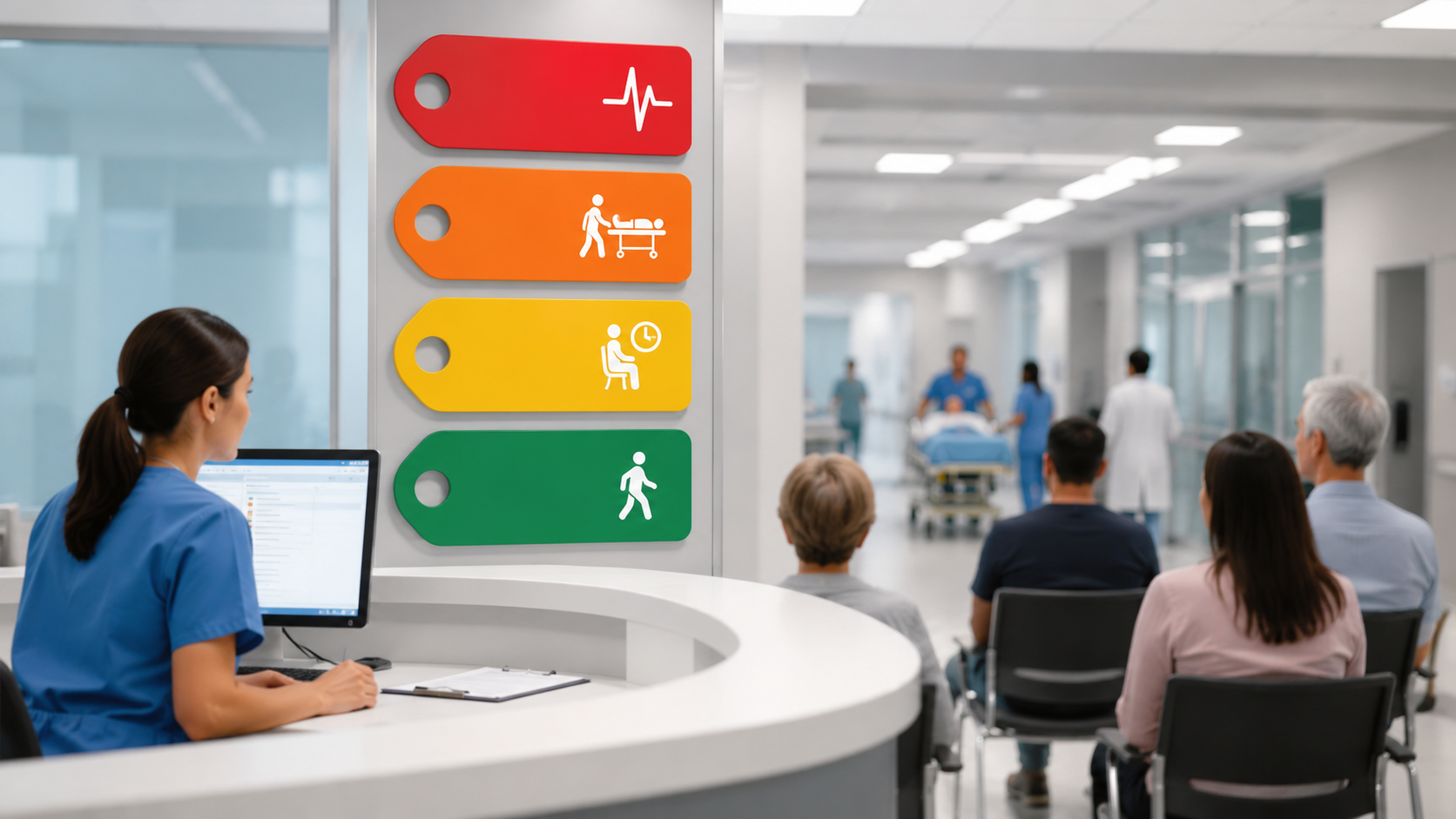
In practice, the triage system generally uses three priority categories.
The red category is assigned to patients whose lives are under immediate threat or whose vital functions are severely compromised. These patients require immediate medical attention without delay.
The yellow category includes patients whose condition is relatively stable but who require prompt medical assessment, close observation, and treatment within a short period of time.
The green category is assigned to patients whose condition is stable and who are not in immediate danger. These patients can safely wait for medical assessment for a limited period.
However, triage is not a one-time assessment. Even if a patient is initially assigned to the yellow or green category, their condition may change while waiting. For this reason, patients should be reassessed at regular intervals and, if necessary, reassigned to a higher priority category.
According to the National Accreditation Standards, establishing a triage room or using color-coded categories alone is not sufficient. The system must function effectively in daily practice, be applied consistently by all healthcare professionals using uniform criteria, reduce clinical risks, and be subject to regular monitoring and performance evaluation.
When properly implemented, the triage system helps prioritize emergency care, identify critically ill patients in a timely manner, improve patient flow management, prevent unnecessary delays, and ensure the efficient use of healthcare resources.
In conclusion, triage is far more than a queue management system. It is a clinical risk assessment mechanism designed to protect patients' lives and ensure patient safety.




 IQ Tech