Establishing a medical clinic requires not only appropriate infrastructure but also full compliance with licensing requirements and conditions. Practice shows that a number of deficiencies are repeatedly identified during the licensing process, often leading to delays in obtaining a license.
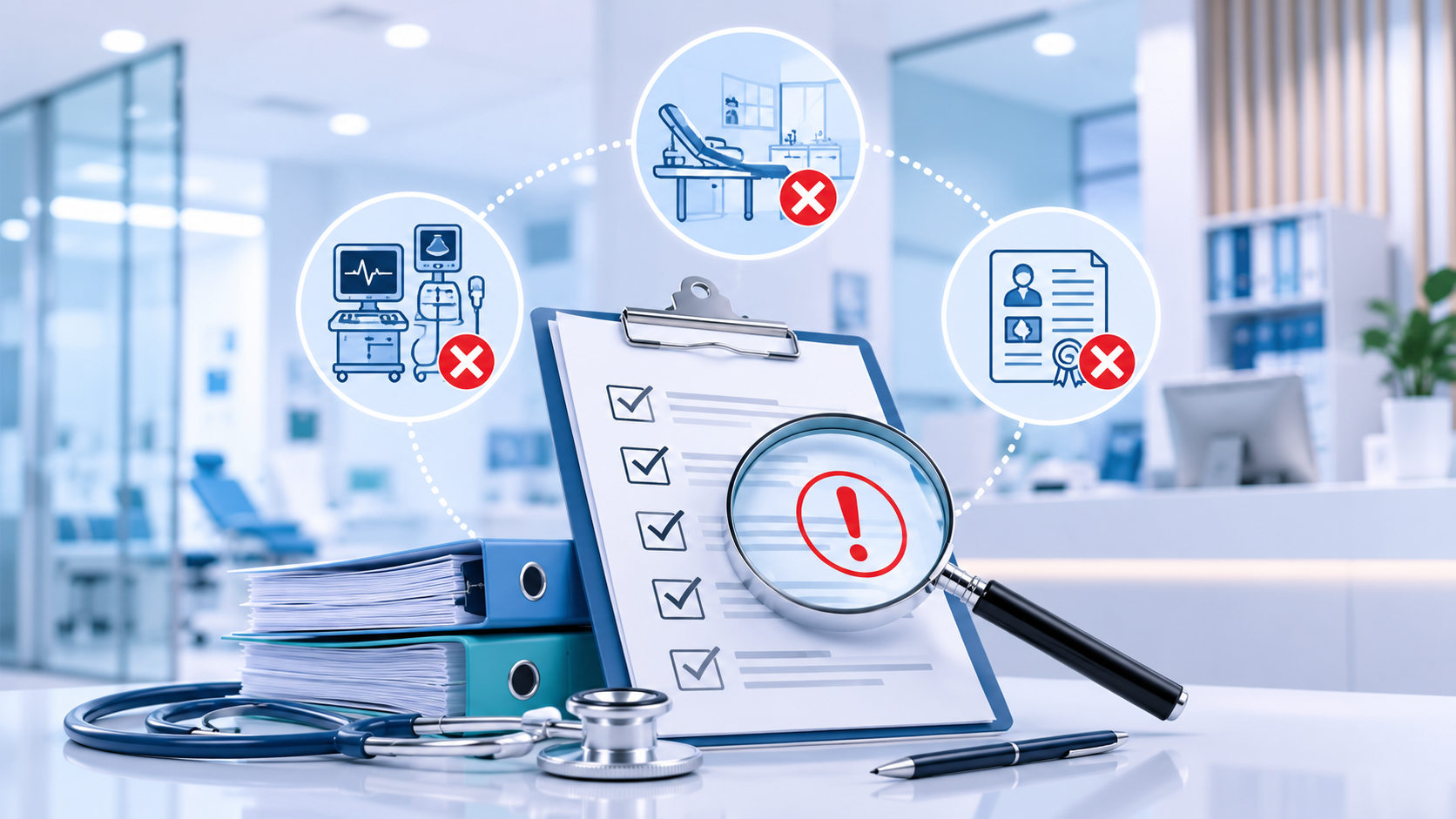
One of the most common issues is non-compliance with sanitary rules and regulations. Failure to organize premises in accordance with sanitary standards, improper functional zoning, and failure to observe hygiene requirements are among the deficiencies most frequently identified during expert assessment.
Another common problem involves medical equipment. A lack of the equipment required for the intended scope of medical services or failure to install and arrange it in accordance with the minimum requirements is considered non-compliance with licensing requirements.
Deficiencies in the documentation of medical personnel are also frequently encountered. In particular, an expired physician's qualification category certificate constitutes non-compliance with licensing requirements and conditions.
Addressing these shortcomings before applying for a license helps ensure a smoother and more efficient licensing process. More importantly, it contributes to improving the quality of medical services and ensuring patient safety.




 IQ Tech