Healthcare-Associated Infections: The Importance of Prevention and Infection Control
Healthcare must be not only effective but also safe. Infections acquired during care can delay recovery, prolong treatment and lead to additional complications. Preventing such infections is therefore an essential part of every healthcare facility’s work.
What is a healthcare-associated infection?
Healthcare-associated infections, or HAIs, are infections that develop while a patient is receiving care and were neither present nor incubating at the time of admission. Their symptoms may appear during treatment or after the patient has been discharged.
HAIs are not limited to hospitals. They may occur in outpatient clinics, diagnostic and surgical centres, dialysis units, rehabilitation facilities and other settings where healthcare is delivered.
Common types of HAIs
The most common healthcare-associated infections include:
- surgical site infections;
- catheter-associated urinary tract infections;
- central line-associated bloodstream infections;
- ventilator-associated pneumonia.
HAIs can be caused by many different microorganisms. Germs may spread through unclean hands, contaminated surfaces and medical equipment that has been improperly used or inadequately reprocessed. Certain medical procedures may also provide a route for microorganisms to enter the body.
Key prevention measures
Preventing infection is not a one-time activity. It must be integrated into everyday clinical practice.
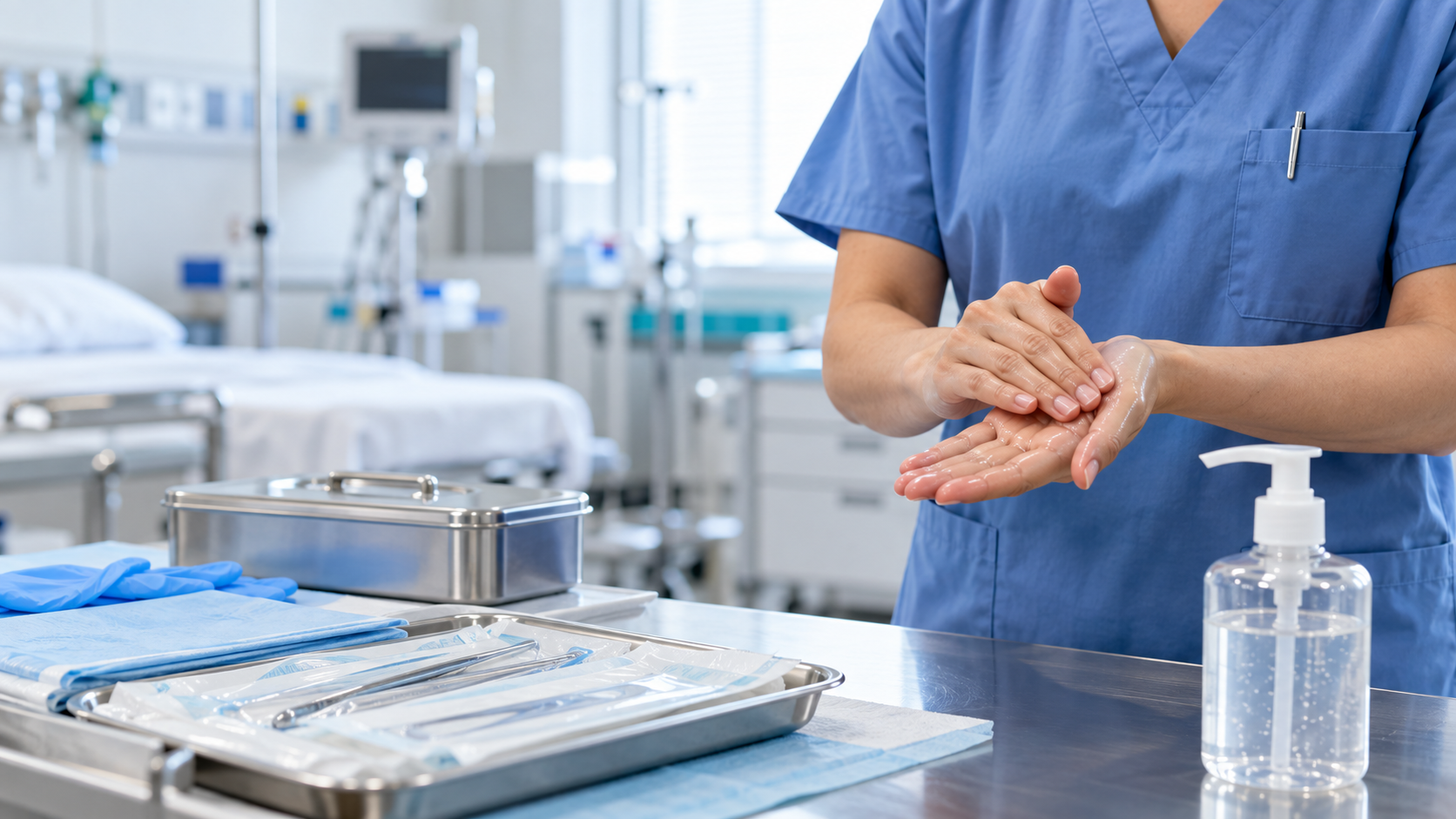
Hand hygiene. Healthcare personnel should clean their hands before and after contact with a patient, before aseptic procedures, after contact with blood, body fluids or contaminated surfaces, and immediately after removing gloves. Wearing gloves does not replace hand hygiene.
Safe reprocessing of medical equipment. Reusable instruments and devices must be cleaned and appropriately disinfected or sterilized before being used for another patient. Clean and contaminated equipment should be stored separately.
Aseptic technique. Proper aseptic practices must be followed during surgery, injections, catheter placement and other invasive procedures.
Environmental cleaning and disinfection. Surfaces close to patients and frequently touched objects require regular cleaning and disinfection. Blood and other potentially infectious spills should be decontaminated promptly.
Appropriate use of medical devices. The need for catheters and other invasive devices should be reviewed regularly. Devices should be removed as soon as they are no longer clinically necessary.
Infection control is an ongoing system
Infection control involves more than cleaning and disinfection. It also requires leadership accountability, qualified infection prevention personnel, regular staff training, monitoring of compliance, surveillance of infection cases and timely analysis of the findings.
Monitoring results should be shared with healthcare personnel and facility leadership, and identified gaps should lead to corrective action. Standard precautions apply to all patients, regardless of whether an infection is suspected or confirmed.
Patient safety begins with everyday practice
It may not always be possible to eliminate the risk of healthcare-associated infections completely. However, consistent hand hygiene, aseptic technique, effective sterilization and disinfection, environmental cleaning, appropriate device use and reliable surveillance can significantly reduce that risk.
Following infection prevention and control requirements during every procedure, every day, helps protect both patients and healthcare personnel.


 IQ Tech