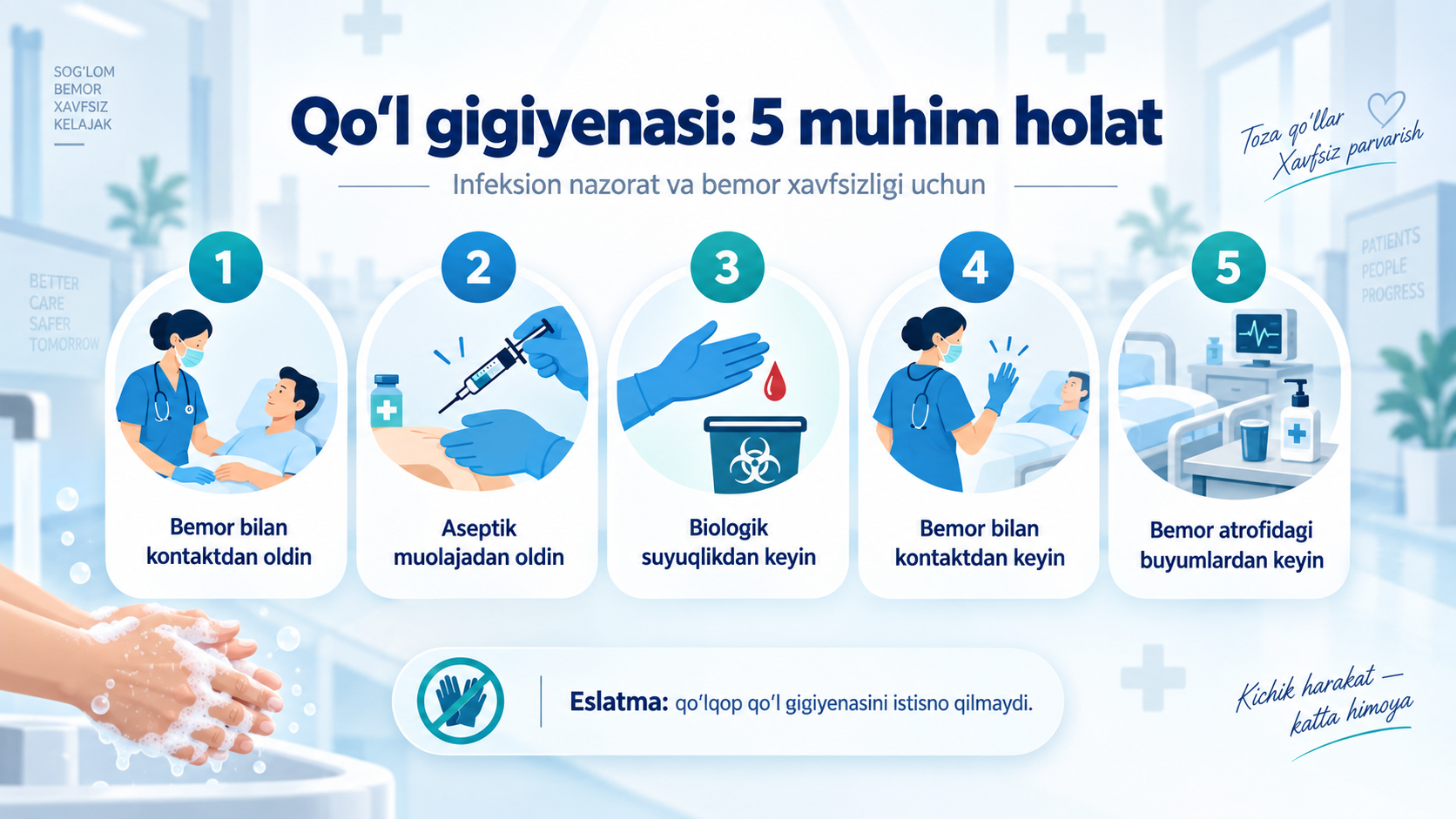
Hand Hygiene in Healthcare: A Key Element of Infection Control and Patient Safety
Proper hand hygiene during the delivery of healthcare plays a crucial role in preventing the spread of infections and protecting both patients and healthcare workers. Timely and correct hand hygiene is one of the fundamental measures of infection prevention and control in healthcare facilities.
Particular attention should be paid to hand hygiene before contact with a patient. Healthcare workers should clean their hands before examining, touching, or otherwise interacting directly with a patient. This helps reduce the risk of transmitting microorganisms from healthcare workers’ hands to the patient.
Hand hygiene is also essential before a clean or aseptic procedure. Hands should be appropriately cleaned before injections, catheter insertion, wound care, and other procedures requiring aseptic conditions.
Another important moment is after a risk of exposure to blood or other body fluids. Hand hygiene should be performed following such exposure, including after removing gloves.
Healthcare workers should also clean their hands after direct contact with a patient. This helps protect the healthcare worker and reduces the risk of transmitting microorganisms to other patients or surfaces.
Hand hygiene is not limited to direct patient contact. It is also required after touching objects or equipment in the patient’s surroundings, such as the bed, bedside table, monitor, or other nearby surfaces, as microorganisms may remain on these items.
It is important to note that wearing gloves does not eliminate the need for hand hygiene. Hands should be cleaned before putting on gloves and after removing them, as well as at other appropriate times.
Consistent hand hygiene is a simple but highly effective measure for reducing infection risks, improving the quality of healthcare, and strengthening patient safety.
This material was prepared based on the WHO “My 5 Moments for Hand Hygiene” recommendations.



 IQ Tech