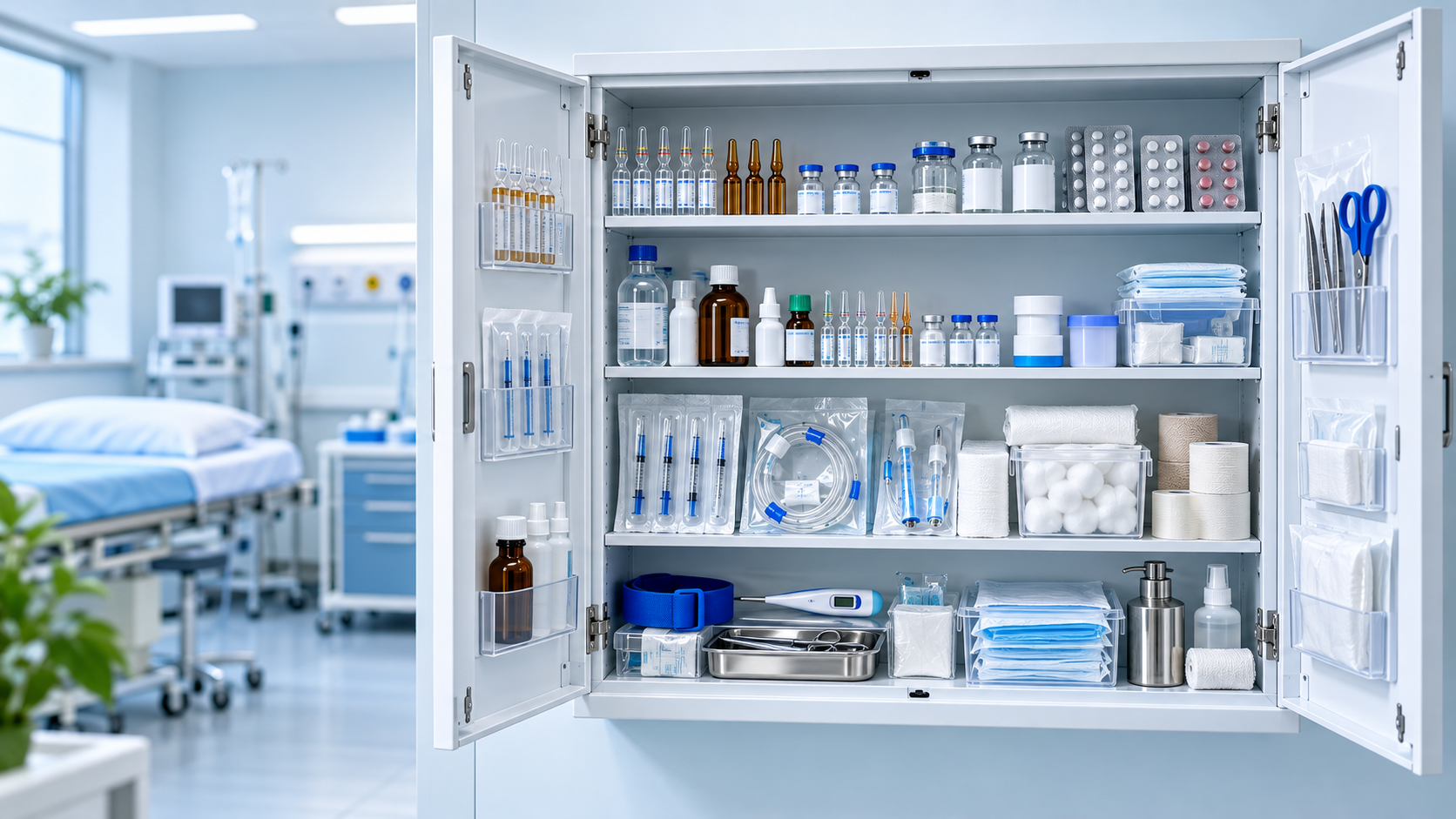
When an emergency occurs in a medical facility, it is essential that the medicines and medical supplies required for timely patient care are readily available.
One of the important licensing requirements for medical activities is the availability of a dedicated cabinet equipped with the medicines and medical supplies necessary for emergency medical care.
In accordance with Order No. 90 of the Ministry of Health, the emergency care cabinet should contain the following minimum set of medicines and medical supplies:
- Analgesics – at least 5 ampoules;
- Cardiac glycosides – at least 5 ampoules;
- Corticosteroid – at least 5 ampoules or 1 vial;
- Antihistamine – at least 5 ampoules;
- Bronchodilator – at least 5 ampoules;
- Anticoagulant – at least 5 ampoules;
- Antihypertensive medication – at least 10 ampoules;
- Diuretic – at least 5 ampoules;
- Antibiotic – at least 5 vials;
- Insulin preparation – at least 1 vial;
- Coronary vasodilator – at least 10 tablets;
- Calcium chloride 10% – 10.0 ml – at least 10 ampoules;
- Alcohol solution of brilliant green;
- Alcohol solution of iodine – at least 1 vial;
- Ammonia-anise drops or an equivalent preparation;
- Medical alcohol 70% – at least 100.0 ml;
- Medical alcohol 96% – at least 50.0 ml;
- Medical cotton wool – at least 100.0 g;
- Sterile and non-sterile medical bandages – at least 4 of each;
- Disposable syringes – 2.0 ml, 5.0 ml and 10.0 ml, at least 10 of each size;
- IV infusion sets – at least 3;
- Hemostatic tourniquet;
- Medical thermometer.
Availability Alone Is Not Enough
The condition and completeness of the medicines and medical supplies in the emergency care cabinet should be checked regularly.
In particular:
– the expiry dates of medicines should be monitored;
– the integrity of packaging and storage conditions should be checked;
– all items should be available in accordance with the approved list and required quantities;
– used items and products approaching their expiry date should be replaced and replenished in a timely manner.
Medicines and supplies should also be arranged in an orderly and easily accessible manner so that valuable time is not lost during an emergency.
Maintaining an emergency care cabinet in accordance with established requirements is not only a licensing requirement, but also an important condition for patient safety and the timely provision of quality medical care.



 IQ Tech